Explore our Adversary Simulation Services:
Simulate Adversary Techniques Used by
Real Hackers to Fix Your Vulnerabilities
Vumetric is one of the leading providers of penetration testing services, renowned for our ability to address a broad spectrum of cybersecurity challenges. Our Adversary Simulation Services mimic real-world hacking techniques to test your organization’s ability to detect, respond to, and withstand cyberattacks. By combining realistic simulations with thorough assessments, we help you stay resilient against evolving threats and protect your infrastructure before vulnerabilities can be exploited.
Red Teaming Assessment
Cyberattack simulation that replicates a motivated attacker attempting to breach your organization by any means necessary and measure your resilience to various types of cyberattacks.
Purple Teaming Assessment
Measure the effectiveness of your employees and systems in responding to a real hacking scenario. Our threat analysis services will highlight real opportunities for attackers to breach your defenses, by identifying each flaw that would have lead to an incident.
Phishing Test
Our phishing tests allow your organization to replicate a real social engineering attack in order to determine which employees are the most susceptible, allowing you to offer adapted training and in turn, mitigating risks that a phishing attack leads to an incident.
Our Adversary Simulation Services go beyond traditional assessments to provide a deeper, more realistic understanding of your security posture. By simulating potential adversary tactics, we help you uncover weaknesses across your systems, processes, and personnel, ensuring that you are prepared to defend against sophisticated attacks, such as ransomware and other advanced persistent threats. Each simulation is tailored to your organization’s unique business objectives and security needs.
The Importance of Device Penetration Testing Services for Securing Vulnerable Devices
A Device Penetration Test is an essential part of a robust cybersecurity risk management strategy for IoT and medical devices. Here are the key benefits of our device penetration testing services:
Identify Hidden Attack Pathways
Adversary simulations go beyond standard testing by emulating real-world hacking techniques to uncover potential attack paths within your systems. By exposing hidden vulnerabilities and access points that could be exploited, these simulations allow you to close critical security gaps before they’re targeted by cybercriminals. This proactive approach strengthens your defenses where they’re most vulnerable, reducing the risk of successful breaches.
Assess Real-World Response Capabilities
Testing your organization’s reaction to simulated attacks helps reveal the true effectiveness of your incident response strategy. By assessing how quickly your team detects and reacts to various attack scenarios, adversary simulation services provide valuable insights into your organization’s readiness. This testing ensures that your incident response process can handle advanced attacks under realistic conditions, allowing you to identify weaknesses and streamline response actions.
Enhance Defensive Strategies
Adversary simulations give you a clear view of which security controls hold up against sophisticated attack tactics and which ones need improvement. With insights derived from realistic simulations, you can prioritize critical defenses, optimize existing controls, and implement effective countermeasures. This enhancement allows you to create a more resilient security infrastructure specifically tailored to your threat profile.
Boost Employee Awareness and Preparedness
Employees are often the first line of defense, but they can also be a weak point if unprepared. Adversary simulation services test your team’s awareness of phishing, social engineering, and other attack tactics, helping you identify those who may need additional training. This tailored approach to employee education ensures that your workforce is better equipped to recognize and report suspicious activities, reducing the likelihood of human error leading to a security breach.
Optimize Incident Response and Recovery
By simulating real attack scenarios, adversary simulations allow you to put your incident response plan to the test. These exercises highlight areas for improvement in containment, eradication, and recovery, ensuring your organization is prepared to handle disruptions effectively. This proactive assessment of incident response readiness helps you minimize downtime, protect valuable assets, and maintain business continuity in the face of actual cyber threats.
Stay Ahead of Advanced Threats
Cyber threats are constantly evolving, with attackers adopting new tactics to bypass traditional defenses. Adversary simulation services keep you informed about the latest attack methods and sophisticated tactics used by real-world hackers. By learning how these adversaries operate, your organization can proactively adapt and fortify defenses, ensuring that you remain one step ahead of emerging threats and continuously improve your cybersecurity posture.
Got an Upcoming Project? Need Pricing For YourAdversary Simulation Services ?
Answer a few questions regarding your needs, project scope and objectives to quickly receive a tailored quote. No engagement.
- You can also call us directly: 1-877-805-7475
Certified Penetration Testers
Our experts hold the most widely recognized penetration testing certifications. Partner with the best in the industry to protect your mission critical IT assets against cyber threats.


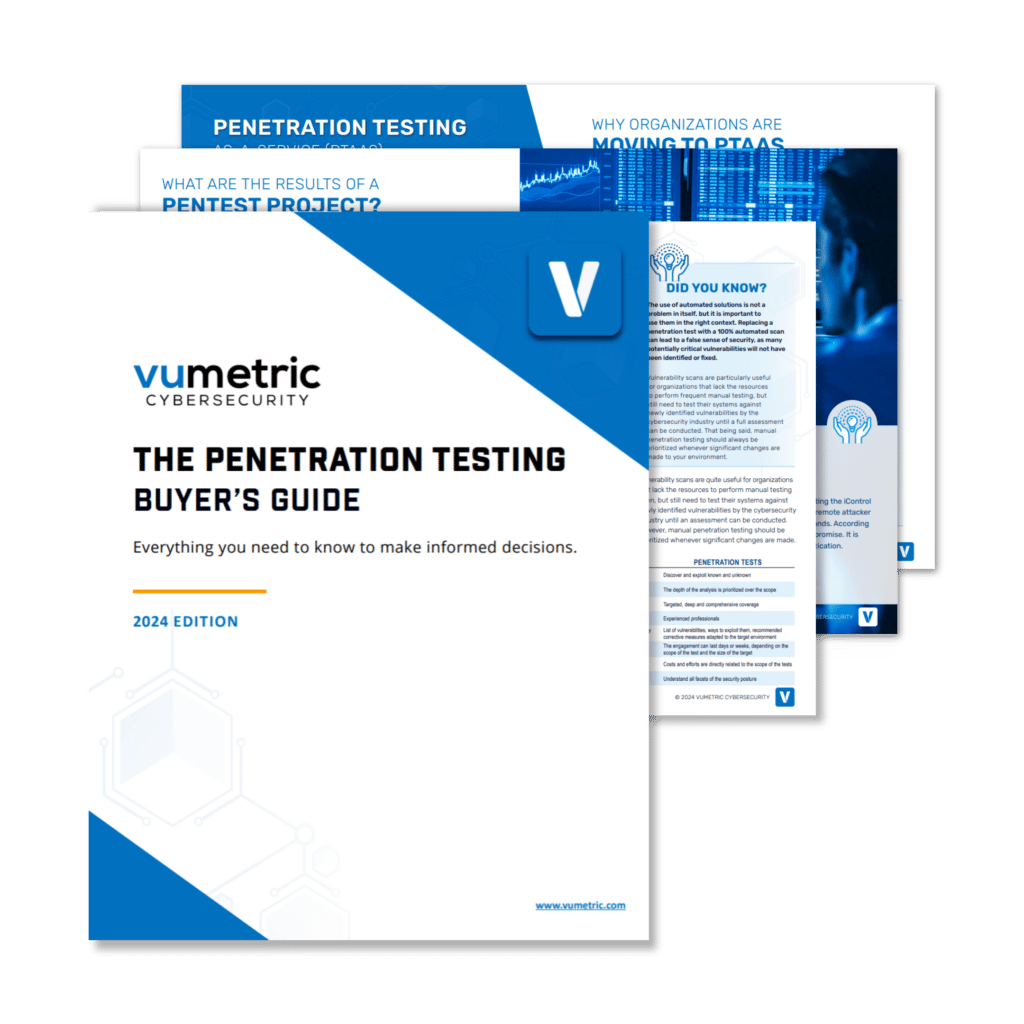
Penetration Testing Guide
(2024 Edition)
Everything you need to know to scope, plan and execute successful pentest projects aligned with your risk management strategies and business objectives.
- The different types of penetration tests and how they compare
- The use cases of vulnerability scans VS. pentests
- The industry's average cost for a typical project
- What to expect from a professional report
- 20 key questions to ask your prospective provider
Expanding Your Cybersecurity Strategy Beyond Network Infrastructure
While network security is a vital part of your defense strategy, it’s only one piece of the puzzle. Our broader penetration testing services cover applications, cloud environments, and other key areas, providing comprehensive protection that strengthens your entire digital ecosystem.
Application Penetration Testing
Safeguard your applications and APIs by identifying hidden vulnerabilities and attack paths that hackers could exploit. Our testing simulates real-world threats, providing you with the insights needed to strengthen your defenses.
Network Penetration Testing
Identifies and prioritizes network vulnerabilities, providing detailed reports, compliance documentation, and expert recommendations to enhance your network security and mitigate risks effectively.
Cloud Penetration Testing
Enhance cloud security with targeted penetration testing for AWS, Google Cloud, and Azure. Uncover vulnerabilities and prevent unauthorized access.
Device Security Testing
Safeguard consumer, commercial, and industrial devices with specialized security assessments, including binary and protocol analysis, reverse engineering, fuzzing, and more.
Explore Our Device Security Services
Enterprise Security
Secure your organization’s IT assets and maximize budget efficiency by aligning your cybersecurity strategy with industry standards through services like Cybersecurity Audits and Ransomware Readiness Assessments.
Adversary Simulation FAQ
Couldn’t find the information you were looking for? Ask an expert directly.
Large Enterprises and Corporations
Large organizations with complex infrastructures benefit greatly from adversary simulation services, as they reveal weaknesses across various departments and networks. Simulations help ensure that enterprise-wide security controls are effective and aligned with current threat landscapes.Healthcare and Financial Institutions
Industries that manage sensitive data, such as healthcare and finance, can enhance their security posture through adversary simulations. By mimicking real attack tactics, these services help protect sensitive data from breaches, ensuring compliance with strict regulatory standards.Organizations in Regulated Industries
Businesses in sectors with stringent security and compliance requirements, such as government, critical infrastructure, and energy, use adversary simulation services to confirm adherence to industry regulations while identifying and closing security gaps.Security Operations Centers (SOCs)
SOC teams benefit from adversary simulations to test and improve their detection and response times. These services enable SOC teams to experience real-world attack scenarios, fine-tuning processes, and enhancing their effectiveness against advanced persistent threats (APTs).Companies Facing Advanced Persistent Threats (APTs)
Organizations that are frequent targets of sophisticated cyberattacks benefit from adversary simulations, as they replicate advanced attack techniques, enabling these companies to proactively address vulnerabilities and strengthen defenses.Businesses with Remote and Hybrid Workforces
Organizations with remote or hybrid work setups benefit from adversary simulation services to test the resilience of their distributed networks and remote access points. These simulations help secure the expanded attack surface and ensure security controls are effectively protecting all entry points.
Evaluating Incident Response Readiness
Adversary simulations allow organizations to test and validate their incident response plans in realistic scenarios. By mimicking actual attack methods, these simulations provide insight into how effectively the team can detect, respond to, and contain threats, helping to identify and improve response gaps.Assessing Security Posture Against Advanced Threats
Organizations concerned about advanced persistent threats (APTs) can use adversary simulation services to understand how they would fare against sophisticated attacks. By replicating complex attack tactics, these services reveal vulnerabilities that would otherwise be exploited by highly motivated attackers.Measuring Employee Awareness and Preparedness
Adversary simulations, particularly through phishing or social engineering scenarios, help organizations gauge employee readiness to recognize and report suspicious activities. This use case helps identify which employees may need additional training and creates awareness around security best practices.Optimizing Security Controls
Adversary simulations test the effectiveness of existing security controls, such as firewalls, intrusion detection systems, and endpoint protection solutions. These exercises reveal weaknesses in security controls and allow organizations to prioritize enhancements for maximum protection.Ensuring Compliance with Industry Regulations
In regulated industries like healthcare, finance, and energy, adversary simulation services demonstrate adherence to compliance requirements (such as HIPAA, PCI DSS, or NIST) by actively testing defenses against potential threats. This proactive testing helps prevent compliance issues and penalties.Testing New Security Policies and Technologies
When implementing new security policies or deploying technologies like multi-factor authentication (MFA) or endpoint detection and response (EDR), adversary simulations help validate the effectiveness of these measures under real-world attack conditions, ensuring the organization’s defenses are robust.Strengthening Remote Work Security
For organizations with a distributed workforce, adversary simulations test the security of remote access, VPNs, and collaboration tools. These simulations help ensure that remote work setups are protected against attacks targeting remote access vulnerabilities.Benchmarking Against Industry Standards
Organizations can use adversary simulations to benchmark their cybersecurity practices against industry standards and best practices. By comparing results with industry norms, they gain insight into areas where security improvements are needed to stay competitive.Validating SOC and Threat Hunting Capabilities
Adversary simulations challenge Security Operations Centers (SOCs) and threat-hunting teams to detect and respond to simulated attacks. This process helps evaluate the effectiveness of SOC processes, personnel, and tools in identifying and stopping threats.Improving Business Continuity and Resilience
By simulating attacks that could disrupt critical operations, adversary simulations help organizations ensure business continuity. They assess the resilience of infrastructure and processes to ensure that, even in the face of an attack, operations can continue with minimal impact.